
南加州同样浓度的细颗粒物增加,野火来源与更大的呼吸系统住院增幅相关
Nature Communications2021时间序列研究Crossref 记录被引 675 次
相同浓度的细颗粒物,来自野火时会带来同样的住院负担吗?
野火来源的细颗粒物与较大的呼吸系统住院增幅相关。作者认为空气质量政策应考虑颗粒物来源带来的健康影响差异。
推荐阅读的理由
空气质量监测常把不同来源的 PM₂.₅ 加在一起。这篇研究把野火和其他来源分开,用同一个浓度增量比较呼吸系统住院的变化。
Wildfire smoke impacts respiratory health more than fine particles from other sources: observational evidence from Southern California
作者摘要 · 中文编译
背景 野火越来越频繁且破坏力增大。毒理学提示,野火颗粒物与等量一般环境颗粒物的影响可能不同,而空气质量管理通常按颗粒物总量评价暴露。
方法 研究者使用多种统计方法和暴露定义,从空气中的细颗粒物区分野火及非野火来源,估计每增加同样浓度与呼吸系统住院人数的关系。
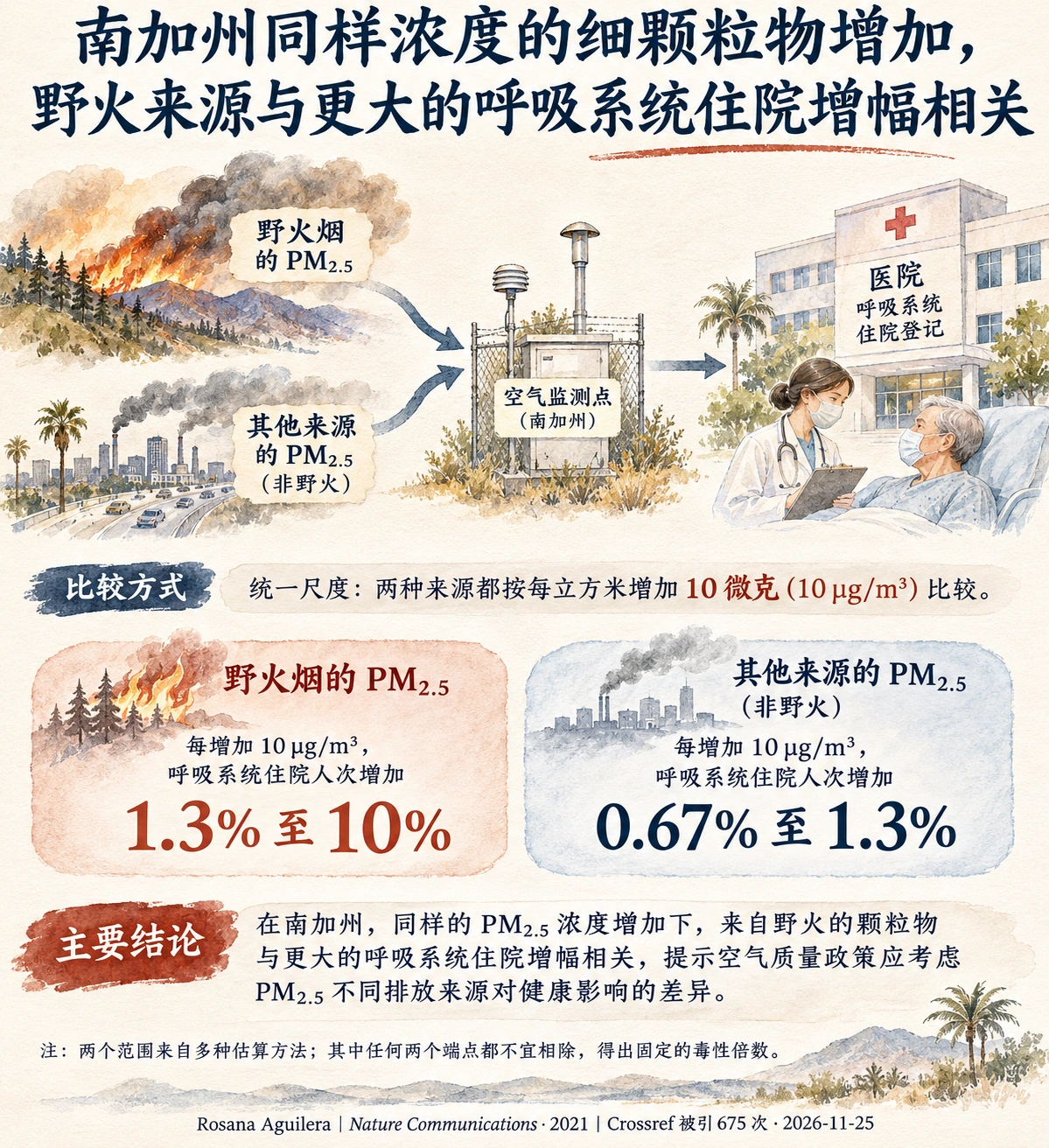
结果 野火来源 PM₂.₅ 每增加 10 微克/立方米,估计呼吸系统住院增加 1.3% 至 10%;其他来源同等增量对应 0.67% 至 1.3%。区间反映不同估计方法的结果。
结论 野火来源的细颗粒物与较大的呼吸系统住院增幅相关。作者认为空气质量政策应考虑颗粒物来源带来的健康影响差异。
展开英文原摘要收起英文原摘要Wildfires are becoming more frequent and destructive in a changing climate. Fine particulate matter, PM2.5, in wildfire smoke adversely impacts human health. Recent toxicological studies suggest that wildfire particulate matter may be more toxic than equal doses of ambient PM2.5. Air quality regulations however assume that the toxicity of PM2.5 does not vary across different sources of emission. Assessing whether PM2.5 from wildfires is more or less harmful than PM2.5 from other sources is a pressing public health concern. Here, we isolate the wildfire-specific PM2.5 using a series of statistical approaches and exposure definitions. We found increases in respiratory hospitalizations ranging from 1.3 to up to 10% with a 10 μg m−3 increase in wildfire-specific PM2.5, compared to 0.67 to 1.3% associated with non-wildfire PM2.5. Our conclusions point to the need for air quality policies to consider the variability in PM2.5 impacts on human health according to the sources of emission.
Wildfires are becoming more frequent and destructive in a changing climate. Fine particulate matter, PM2.5, in wildfire smoke adversely impacts human health. Recent toxicological studies suggest that wildfire particulate matter may be more toxic than equal doses of ambient PM2.5. Air quality regulations however assume that the toxicity of PM2.5 does not vary across different sources of emission. Assessing whether PM2.5 from wildfires is more or less harmful than PM2.5 from other sources is a pressing public health concern. Here, we isolate the wildfire-specific PM2.5 using a series of statistical approaches and exposure definitions. We found increases in respiratory hospitalizations ranging from 1.3 to up to 10% with a 10 μg m−3 increase in wildfire-specific PM2.5, compared to 0.67 to 1.3% associated with non-wildfire PM2.5. Our conclusions point to the need for air quality policies to consider the variability in PM2.5 impacts on human health according to the sources of emission.
Rosana Aguilera, Thomas Corringham, Alexander Gershunov, Tarik Benmarhnia
© The Author(s) 2021
每增加 10 微克/立方米
| 每增加 10 微克/立方米 | 呼吸系统住院相对变化 |
|---|---|
| 野火来源 PM₂.₅ | 增加 1.3% 至 10% |
| 非野火来源 PM₂.₅ | 增加 0.67% 至 1.3% |
作者的结论
野火来源的细颗粒物与较大的呼吸系统住院增幅相关。作者认为空气质量政策应考虑颗粒物来源带来的健康影响差异。
研究团队与论文影响
Rosana Aguilera 等报告南加州野火烟雾与呼吸系统住院的分析,发表于《Nature Communications》。 论文署名单位包括美国加利福尼亚大学圣迭戈分校。
Crossref 收录本文引用 675 次。
单篇与期刊指标核查于 。
原文与延伸阅读
引用这篇文章与反馈纠错
研象编辑部.南加州同样浓度的细颗粒物增加,野火来源与更大的呼吸系统住院增幅相关[EB/OL].研象,2026-11-25.https://yanxiang.hk/papers/wildfire-smoke-respiratory-admissions
发现数字、译文或出处有误,可以在邮件里指出相应段落,附上核对依据。